Multi-Model Brainstorming: When Three AIs Are Better Than One
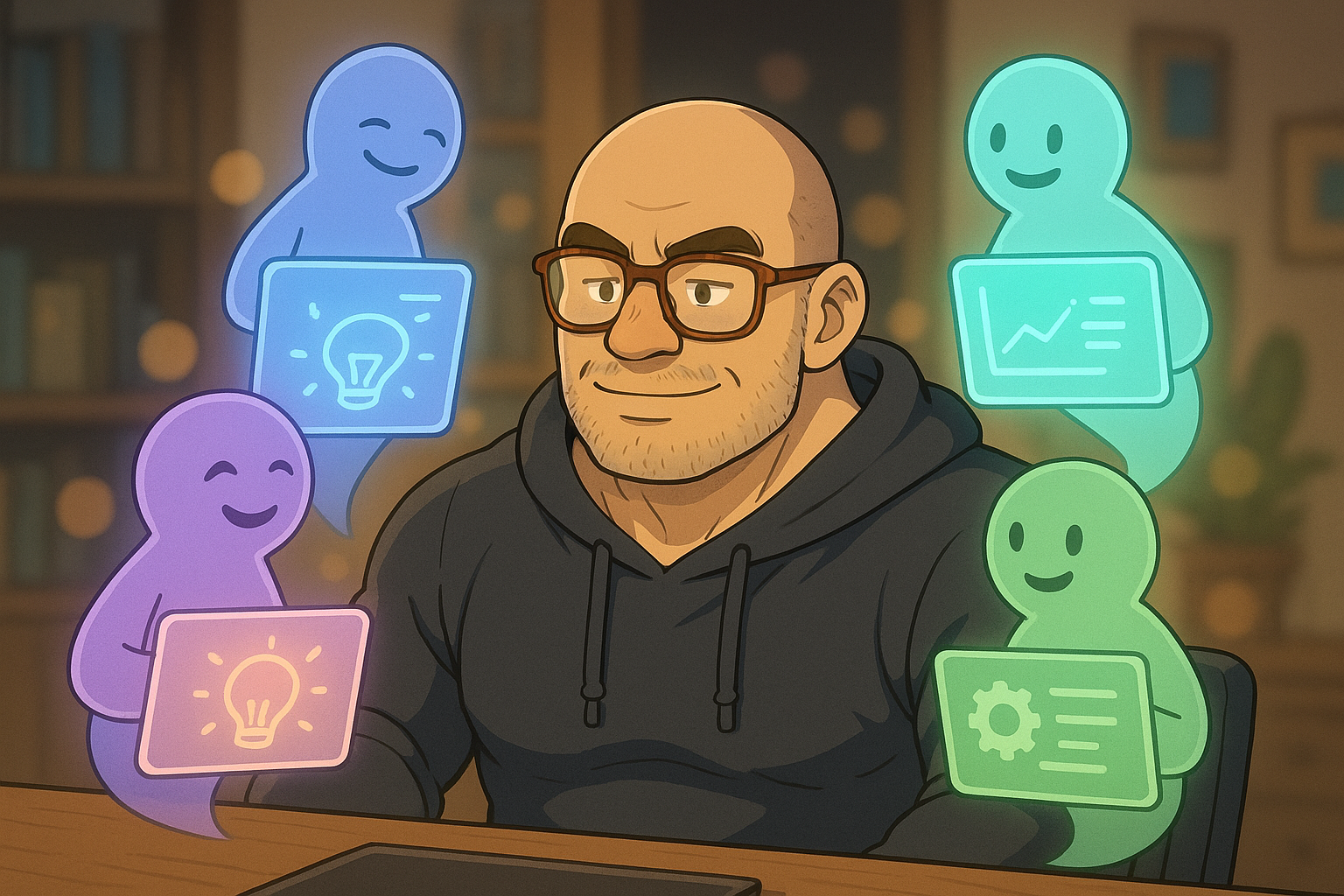
What happens when you ask the same creative question to three different AI models simultaneously?
I ran an experiment using OpenClaw: I asked my AI assistant to spawn three parallel sessions—one for Claude Opus, one for Google Gemini, one for GPT-4o—and give them identical prompts. Then I asked it to compare the outputs and look for patterns.
The Setup
The assistant—itself running on Claude—handled the orchestration. Same prompt to all three. Same context. No leading questions. Just: “Give me 7 creative ideas for X.”
The irony isn’t lost on me: an AI coordinating a comparison of AIs. But that’s precisely the point. What would have been tedious copy-paste across three browser tabs became a single request.
The goal wasn’t to find a “winner”—it was to see how different architectures and training approaches shape creative output.
What Emerged
The consensus ideas were the safe bets. All three models independently suggested similar concepts for about 40% of their ideas. These overlapping suggestions likely represent well-established patterns in the training data—solid, proven approaches that any competent system would surface.
The unique ideas revealed model personalities.
Claude Opus leaned toward systematic thinking. Its unique suggestions included detailed edge cases, implementation considerations, and infrastructure dependencies. When asked for detailed specifications, Opus produced the most thorough acceptance criteria and thought through file structures unprompted.
Gemini showed practical creativity. Its unique ideas focused on user experience moments and included considerations that weren’t in the original prompt—timezone handling, seasonal variations, edge cases around user behavior patterns. It also suggested the most consumer-friendly copy for user-facing messages.
GPT-4o prioritized constraint awareness. Its unique contributions included anti-abuse mechanisms, rate limiting suggestions, and realistic effort estimates. It was the most likely to flag potential exploits or gaming scenarios.
The Merge
After collecting the initial ideas, I asked the assistant to compile a deduplicated list and send it back to all three models: “Now write detailed specifications for each.”
The same pattern emerged:
- Opus: Most thorough on technical architecture
- Gemini: Best at UX copy and behavioral edge cases
- GPT-4o: Strongest on constraints and anti-gaming measures
Then I asked it to merge the best criteria from each model’s output. The final specifications were stronger than any single model would have produced alone.
Takeaways
Single-model conversations are like consulting one expert. You get their perspective, shaped by their training and tendencies.
Multi-model brainstorming is like having a diverse team debate in fast-forward. The consensus ideas validate your direction. The unique ideas push your thinking. The merge creates something none of them would have produced individually.
This isn’t about finding the “best” model. It’s about recognizing that different models have different strengths—and using an orchestration layer to combine those strengths systematically.
The overhead is minimal. The insight is significant.
Orchestrated through OpenClaw. From first prompt to final merged specifications: about 30 minutes.